
Is Staging a Protest Legal in India?Understanding your Constitutional Rights Through the CJP Protest
This blog is about protest rights and restriction law gives in india with reference to the CJP protest on JANTAR-MANTAR in delhi.The blog also discuss current news on CJP
Team classicblogging
7/21/20263 min read
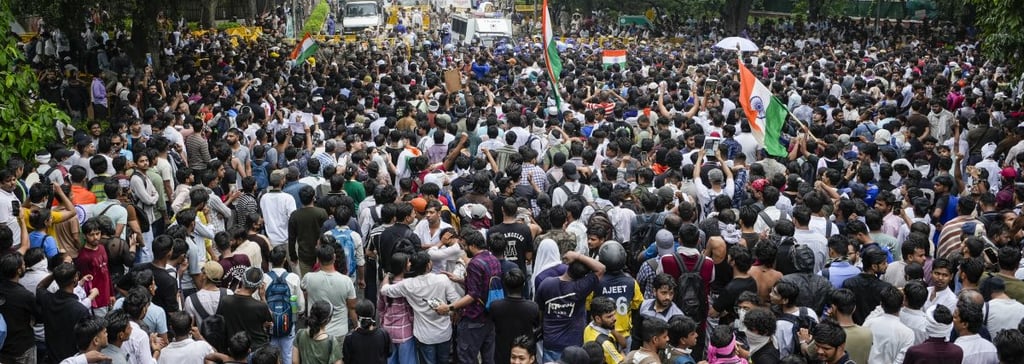
India is the world's largest democracy, and one of the strongest features of a democracy is the right of citizens to raise their voice peacefully. The recent protest by the Cockroach Janta Party (CJP), where thousands of supporters attempted to march towards Parliament, has once again sparked an important question: Is staging a protest legal in India?
The short answer is yes—but with important legal limits.
What Happened During the CJP Protest?
On Monday, the Cockroach Janta Party (CJP) organized a large protest march towards Parliament in New Delhi. Thousands of supporters participated, prompting heavy police deployment. Authorities closed the gates of the Parliament complex and stopped protesters from reaching the area.
Later, CJP chief spokesperson Saurav Das posted on X that party representatives had met senior BJP leader JP Nadda and submitted a written letter listing their demands. The incident has reignited the debate over how far the right to protest extends under Indian law.
Does the Indian Constitution Allow Protests?
Yes. The Constitution of India protects the right to protest through several Fundamental Rights.
Article 19(1)(a): Freedom of Speech and Expression
Every citizen has the right to express opinions, criticize government policies, and raise public issues peacefully.
Article 19(1)(b): Right to Assemble Peacefully
Citizens have the right to gather peacefully and without weapons. Peaceful marches, rallies, sit-ins, and demonstrations generally fall under this protection.
Article 19(1)(c): Right to Form Associations
People can create organizations, unions, political parties, and groups to collectively voice their concerns.
Together, these rights form the constitutional foundation for peaceful protests in India.
Can Anyone Protest Anywhere?
No.
The Constitution allows the government to impose reasonable restrictions in the interest of:
Public order
National security
Sovereignty and integrity of India
Public safety
Prevention of violence or riots
This means authorities can regulate the time, place, and manner of protests.
Can People Protest at Parliament?
Parliament is one of India's most sensitive security zones.
While citizens have the right to protest, they cannot simply march into or protest inside the Parliament complex. The Delhi Police can restrict entry, create security barricades, and deny permission for demonstrations near high-security government buildings.
Large marches towards Parliament generally require prior permission, and authorities may stop them if they believe public safety or security could be affected.
What Forms of Protest Are Legal?
Peaceful protests generally include:
Peaceful rallies
Sit-in demonstrations (dharna)
Public meetings with permission
Signature campaigns
Candle marches
Silent protests
Human chains
Peaceful marches approved by authorities
These activities are protected as long as they remain peaceful and follow the law.
What Is Not Allowed?
A protest may become illegal if it involves:
Violence or rioting
Damage to public or private property
Blocking emergency services
Entering restricted government areas without permission
Carrying weapons
Inciting hatred or violence
Ignoring lawful police orders under emergency restrictions
Participants may face legal action if a protest turns violent or violates public safety laws.
What Have the Courts Said?
The Supreme Court of India has repeatedly stated that the right to protest is a fundamental democratic right, but it is not absolute.
In several judgments, including the Shaheen Bagh case (2020), the Court observed that while peaceful protests are protected, public roads and public spaces cannot be occupied indefinitely in a way that disrupts the rights of others. The Court has emphasized the need to balance the right to protest with the public's right to free movement and normal life.
The Bigger Democratic Balance
The CJP protest is another reminder that democracy depends on both citizen participation and rule of law. People have every right to raise concerns and demand accountability from the government, but protests must remain peaceful and comply with lawful restrictions imposed for security and public order.
A healthy democracy is not one where protests are suppressed, nor one where public order is ignored—it is one where rights and responsibilities exist together.
Final Thoughts
Yes, staging a protest is legal in India. The Constitution guarantees every citizen the right to speak, assemble peacefully, and express dissent. However, these rights come with reasonable restrictions designed to protect public safety, national security, and the rights of others.
The recent CJP protest near Parliament illustrates this balance: citizens exercised their democratic right to protest, while authorities enforced security measures around one of the country's most sensitive institutions. The episode serves as a reminder that in India, the right to protest is a cornerstone of democracy—but it must always be exercised peacefully, responsibly, and within the framework of the law.